
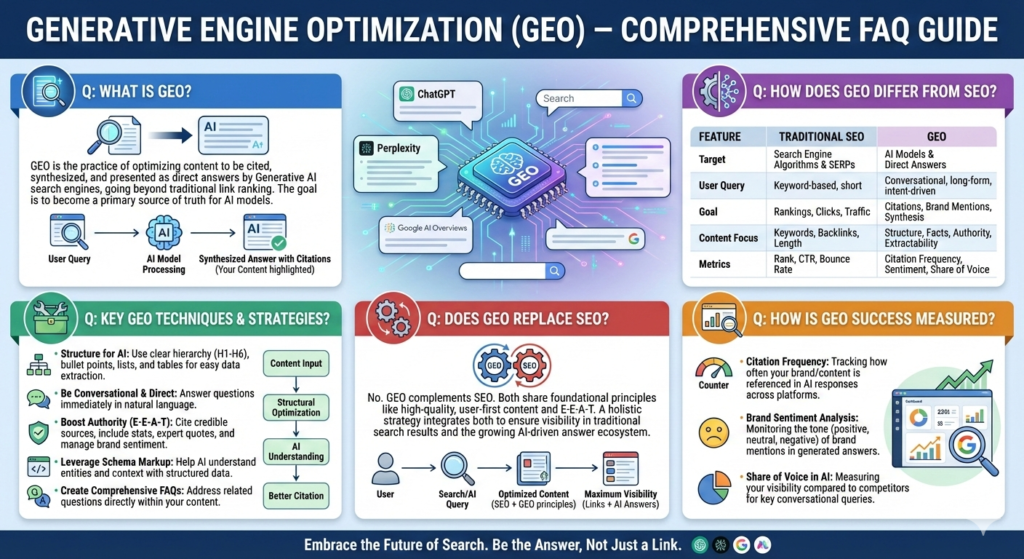
What is Generative Engine Optimization (GEO)?
Q: What exactly is Generative Engine Optimization (GEO)?
A: Generative Engine Optimization (GEO) is the practice of optimizing your content, website, and digital presence to perform well in AI-powered generative search engines and AI chatbots like ChatGPT, Claude, Gemini, Perplexity, and other large language models (LLMs). Unlike traditional SEO that focuses on Google’s ranking algorithm, GEO focuses on getting your content cited, recommended, and referenced by AI systems when users ask questions.
Q: How is GEO different from traditional SEO?
A: Traditional SEO focuses on ranking high on search engine results pages (SERPs). GEO focuses on being cited as a source by generative AI systems. While SEO is about visibility on search results, GEO is about being a trusted source that AI systems reference when answering user queries. Both are important in today’s digital landscape.
Content Strategy for GEO
Q: What type of content performs best for Generative Engine Optimization?
A: Content that performs well for GEO typically includes:
- Comprehensive, authoritative guides and long-form content (2,000+ words)
- Original research and data
- Expert opinions and industry insights
- Clear, well-structured information with proper headings
- Fact-based content with citations
- Content that directly answers specific questions
- Case studies and real-world examples
Q: Should I still focus on keywords for GEO?
A: Yes, but differently. Instead of keyword density and exact match targeting, focus on semantic keywords and natural language. Use long-tail keywords and question-based phrases that users might ask AI chatbots. Include variations of keywords naturally throughout your content rather than forcing them.
Q: How important is content length for GEO?
A: Longer, comprehensive content generally performs better for GEO. AI systems tend to cite more detailed, authoritative sources. Aim for at least 2,000-3,000 words for pillar content, though quality matters more than word count. Thin, superficial content is less likely to be referenced by AI systems.
Q: Does my content need to be original to rank in GEO?
A: Yes, originality is crucial for GEO. AI systems and their training prioritize original research, unique insights, and primary sources. Repurposed or thin content is less likely to be cited. Create unique, valuable content that provides information you can’t find elsewhere.
Technical Optimization for GEO
Q: What technical SEO factors matter for GEO?
A: Key technical factors include:
- Fast page load speeds (Core Web Vitals)
- Mobile responsiveness
- Clear site structure and navigation
- XML sitemaps
- Schema markup (structured data)
- Secure HTTPS connection
- Proper meta tags and descriptions
- Clean, crawlable code
Q: Is schema markup important for Generative Engine Optimization?
A: Yes, schema markup helps AI systems understand your content better. Use appropriate schema types like Article, NewsArticle, ScholarlyArticle, FAQPage, HowTo, and FAQPage. Structured data helps AI systems extract and cite your information more accurately.
Q: Does site authority matter for GEO?
A: Absolutely. Domain authority and E-E-A-T (Experience, Expertise, Authoritativeness, and Trustworthiness) are critical. AI systems are trained to recognize and cite authoritative sources. Building backlinks, creating expert content, and establishing your site as an industry leader all contribute to better GEO performance.
Content Optimization Strategies
Q: How do I optimize content for AI chatbots specifically?
A:
- Write clear, concise answers to specific questions
- Use bullet points and numbered lists for easy parsing
- Include summary sections at the beginning and end
- Structure content logically with descriptive headings
- Provide citations and sources within your content
- Use clear language that AI can easily understand
- Include data, statistics, and research findings
- Make your expertise and credentials clear
Q: Should I use FAQs for GEO?
A: Yes, FAQ sections are excellent for GEO. AI systems frequently reference FAQs when answering user questions. Create comprehensive FAQs that address common questions in your industry, with detailed, well-researched answers.
Q: How important are headings and subheadings for GEO?
A: Very important. Clear, descriptive headings help AI systems understand the structure and content of your page. Use H1 for main topic, H2 for main sections, and H3 for subsections. This hierarchy helps AI systems navigate and reference your content more effectively.
Q: What’s the importance of E-A-T for Generative Engine Optimization?
A: E-A-T is critical for GEO. AI systems are trained to prioritize authoritative sources. Demonstrate your expertise by:
- Including author credentials and bio
- Citing relevant experience
- Linking to your published work
- Getting backlinks from authoritative sites
- Creating content on your area of expertise
- Updating content regularly
- Providing citations and sources
Building Authority and Trustworthiness
Q: How do I build authority for GEO?
A:
- Publish consistently in your niche
- Create original research and data
- Get backlinks from reputable sources
- Build a strong author presence
- Engage with industry communities
- Guest post on authoritative sites
- Earn media mentions and citations
- Develop deep expertise in specific topics
Q: Does social media help with Generative Engine Optimization?
A: Indirectly. While social media signals aren’t direct GEO ranking factors, they help build brand authority and drive traffic. AI systems may reference content that’s widely discussed and recommended on social platforms, particularly from authoritative accounts.
Q: How important are backlinks for GEO?
A: Backlinks remain important for GEO. Quality backlinks from authoritative sites signal that your content is trustworthy and worth citing. Focus on earning backlinks naturally through creating excellent, unique content that others want to reference.
AI and Generative Search Trends
Q: Which AI systems and generative search engines should I optimize for?
A: Focus on major platforms:
- ChatGPT and GPT-4
- Google Gemini (formerly Bard)
- Microsoft Copilot
- Perplexity AI
- Claude (Anthropic)
- Emerging generative search engines
While each has different training and citation methods, optimizing for high-quality, authoritative content generally works across all of them.
Q: How are AI systems trained, and how does that affect GEO?
A: Most large language models are trained on vast amounts of web content. They learn patterns from high-quality, authoritative sources. After training, they may use retrieval mechanisms to cite current sources when answering questions. Understanding that AI systems prioritize authoritative, well-structured content helps you optimize accordingly.
Q: Do AI systems cite sources, and if so, how can I ensure my content is cited?
A: Many AI systems do cite sources when generating responses. To increase citations:
- Create authoritative, well-researched content
- Use clear headings and structured data
- Include original research and unique data points
- Ensure high domain authority
- Make your content easily crawlable and indexable
- Use proper citation formats within your content
Publishing and Distribution
Q: Should I still publish on my own website for GEO?
A: Yes, absolutely. Your own website is your most valuable asset for GEO. Ensure your site is fast, secure, well-structured, and technically optimized. This should remain your primary focus.
Q: Does publishing on Medium, LinkedIn, or other platforms help GEO?
A: Yes, but these are supplementary. Publishing on established platforms can increase visibility and citations, but your own website should be your primary focus. Cross-publish strategically, but always link back to your definitive version on your site.
Q: How often should I update content for Generative Engine Optimization?
A: Regularly update content to:
- Keep information current
- Add new research and data
- Fix outdated information
- Add new sections as your expertise grows
- Improve based on new search intent
Aim to review and update major content pieces at least annually, with more frequent updates for fast-changing topics.
Measuring GEO Success
Q: How do I measure the success of my Generative Engine Optimization efforts?
A: Track these metrics:
- Direct citations in AI-generated content (manual checking)
- Branded searches and mentions
- Referral traffic from AI systems
- Authority metrics (domain authority, backlinks)
- Content engagement and time on page
- Social mentions and shares
- Email inquiries and conversions
Q: What tools can help me monitor GEO performance?
A: Use tools like:
- Google Search Console (for visibility)
- Ahrefs or Semrush (for backlinks and authority)
- Google Analytics (for traffic and referral sources)
- Brand monitoring tools
- Manual searches in AI chatbots
- Rank tracking tools with SERP features
- Content auditing tools
Q: How long does it take to see results from GEO optimization?
A: GEO results typically take longer than traditional SEO changes:
- 3-6 months for noticeable improvements
- 6-12 months for significant authority building
- 12+ months for maximum impact
Consistency and patience are key. AI systems continuously update their training data, so ongoing optimization is necessary.
Common Mistakes and Best Practices
Q: What are the biggest mistakes people make with Generative Engine Optimization?
A: Common mistakes include:
- Creating thin or low-quality content
- Ignoring technical SEO fundamentals
- Not establishing author credentials
- Failing to cite sources
- Neglecting content structure
- Not building backlinks
- Ignoring mobile optimization
- Updating content infrequently
- Not understanding your target AI systems
Q: What are the best practices for GEO?
A:
- Create comprehensive, original content
- Establish expertise and authority
- Use clear content structure with proper headings
- Optimize technical factors
- Build quality backlinks
- Update content regularly
- Use schema markup appropriately
- Focus on genuine user value
- Monitor and measure results
- Stay updated on AI developments
Q: Should I optimize for GEO at the expense of traditional SEO?
A: No. Optimize for both. The fundamentals overlap significantly—authority, quality content, technical optimization, and user experience matter for both traditional SEO and GEO. Focus on creating genuinely valuable content that serves both search engines and AI systems.
Future of GEO
Q: Will GEO become more important than traditional SEO?
A: Likely both will coexist and evolve. Generative search is growing rapidly, but traditional search remains important. A balanced approach that optimizes for both is the best strategy for long-term success.
Q: How should I prepare my content strategy for the future?
A:
- Focus on quality and originality
- Build genuine authority in your niche
- Stay updated on AI and search trends
- Diversify your content across platforms
- Maintain strong technical fundamentals
- Build sustainable backlink profiles
- Create content that truly helps users
- Experiment with AI systems to understand how they cite sources