
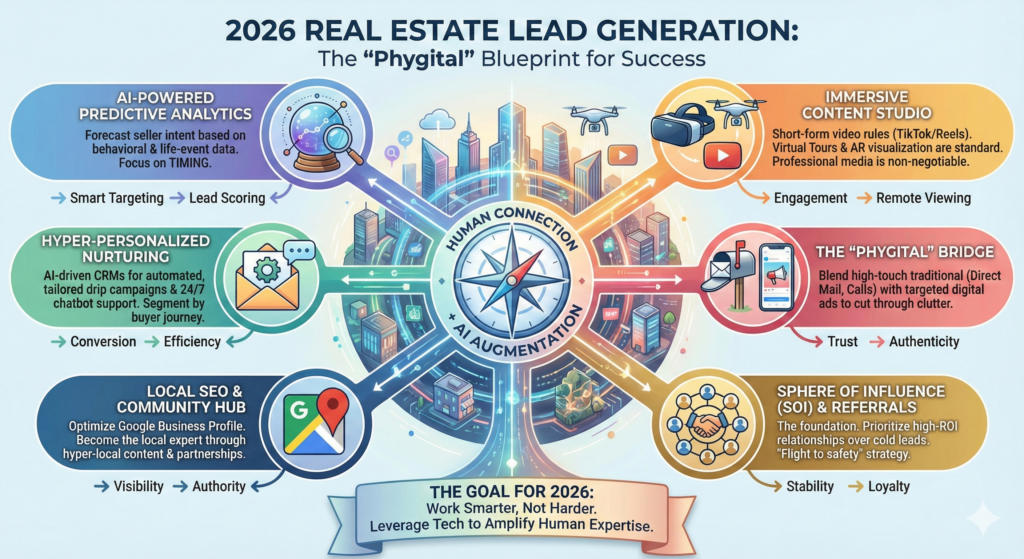
The real estate industry in 2026 is more competitive than ever, and agents and brokers who want to succeed must master modern lead generation strategies. Whether you’re an independent real estate professional or part of a larger real estate marketing agency, understanding how to capture and convert property buyer leads has become essential for growth.
Lead generation for real estate has evolved dramatically over the past few years. Gone are the days when a few yard signs and newspaper ads were enough to attract serious buyers and sellers. Today’s market demands a sophisticated, multi-channel approach that combines real estate digital marketing, cutting-edge technology, and data-driven strategies.
This comprehensive guide will walk you through everything you need to know about real estate lead generation in 2026, covering proven tactics that will help you build a consistent pipeline of qualified leads.
Why Real Estate Lead Generation Matters Now More Than Ever
The first step to understanding real estate lead generation is recognizing why it’s so critical to your success. The competition for buyer and seller leads has intensified across all markets. Consumers have more options than ever before, and they’re conducting extensive online research before they ever contact an agent.
According to industry data, over 97% of home buyers begin their search online. This means that if you’re not visible in digital spaces where your potential clients are searching, you’re losing opportunities to competitors who are. Real estate lead generation services have become a vital investment for agents who want to stay competitive.
The cost of acquiring a single lead has risen across the industry, making it more important than ever to implement efficient, targeted strategies. A successful real estate lead generation approach ensures that you’re reaching the right prospects at the right time with the right message.
Understanding Your Property Buyer Leads
Effective real estate lead generation starts with understanding who your ideal clients are. Property buyer leads fall into several categories, and each requires a slightly different approach.
First-time homebuyers often search for educational content and affordability guides. They’re typically anxious about the process and respond well to content that builds trust and provides clear information. Move-up buyers are looking for homes that match their growing families or changing lifestyles, while investment property buyers are focused on ROI and market data.
By segmenting your property buyer leads and understanding their specific needs, you can create more targeted messaging that resonates with each group. This segmentation is crucial for maximizing your conversion rates from initial inquiry to signed listing agreement or closed sale.
Real Estate Digital Marketing Strategies for 2026
Search Engine Optimization and Real Estate SEO Services
Real estate SEO services remain one of the most cost-effective long-term lead generation strategies available. Unlike paid advertising where you stop getting traffic when you stop paying, a well-executed SEO strategy continues to generate leads month after month.
Focus on creating location-specific content that targets buyers and sellers in your market. Pages optimized for keywords like “homes for sale in [Your City],” “best neighborhoods in [Your City],” and local real estate guides will attract highly qualified traffic. Ensure your website has proper technical SEO, fast loading speeds, and mobile optimization—critical factors that search engines prioritize.
Real Estate Google Ads Campaign Strategy
Complementing your organic efforts, a well-structured real estate Google Ads campaign can generate immediate visibility for high-intent keywords. Many buyers actively searching “buy homes near me” or “real estate agents in [location]” are ready to take action.
Create separate campaigns for different property types and buyer segments. Use negative keywords to eliminate irrelevant searches and focus your budget on the most qualified prospects. Remarketing campaigns are particularly effective, targeting people who’ve visited your website but haven’t yet converted.
Real Estate Facebook Ads: Building Targeted Campaigns
Real Estate Facebook Ads offer unprecedented targeting capabilities. You can reach people based on their interests, behaviors, income levels, and even their life events—like recently married couples or those searching for second homes.
Create different ad sets for different audience segments. Video content performs exceptionally well on Facebook, so consider investing in professional video tours of your listings and educational content about the home-buying process. Use carousel ads to showcase multiple properties and lead generation for real estate landing pages designed specifically to capture contact information.
Leveraging Real Estate CRM Solutions
No lead generation strategy is complete without proper systems to manage and nurture your leads. Real estate CRM solutions have become indispensable tools for agents who want to stay organized and maintain consistent follow-up.
A good CRM allows you to track every interaction with potential clients, automate follow-up sequences, and segment leads based on their behavior and interests. Many modern CRM platforms integrate with your website, email, and phone systems, creating a seamless workflow that prevents leads from falling through the cracks.
Popular real estate CRM solutions offer features like automated drip campaigns, lead scoring, and detailed analytics that show you exactly which lead generation channels are delivering the best ROI. This data-driven approach means you can continuously optimize your real estate marketing agency efforts and allocate budget to your highest-performing channels.
Advanced Lead Generation for Property Developers
If you’re a property developer or work with development companies, your lead generation approach needs to be different from residential agents. Lead generation for property developers requires a longer sales cycle and often involves multiple decision-makers.
Develop content that speaks to investors, business owners, and other developers. Host webinars about investment opportunities, create detailed market analysis reports, and establish yourself as a thought leader in your niche. LinkedIn becomes particularly important for this audience, as does email marketing to qualified developer lists.
Building an Integrated Real Estate Marketing Agency Approach
The most successful real estate marketing strategies in 2026 integrate multiple channels into a cohesive system. Rather than relying on a single lead generation source, build a diversified pipeline.
A typical integrated approach might include: a strong organic SEO presence capturing 30% of leads, Google and Facebook Ads generating 40%, direct referrals and networking bringing in 20%, and partnerships with real estate lead generation services filling the remaining 10%.
This diversification protects you if one channel becomes saturated or if algorithm changes affect your visibility. It also allows you to test different approaches and double down on what works in your specific market.
Email Marketing and Lead Nurturing
Once you’ve attracted property buyer leads through digital channels, your ability to nurture and convert them becomes critical. Most buyers and sellers aren’t ready to make a decision on their first contact.
Implement automated email sequences that provide value while gently moving prospects toward a conversation. Share market updates, educational content about the home-buying process, and success stories from past clients. Personalize your messages based on the specific interests and behaviors of your leads.
Measuring and Optimizing Your Real Estate Lead Generation Efforts
The foundation of a successful real estate lead generation system is measurement. You need to know which channels are actually producing leads that convert to clients and which are simply consuming budget.
Track metrics like cost per lead, cost per acquisition, lead quality scores, and conversion rates by source. Most real estate CRM solutions provide reporting dashboards that make this analysis straightforward. Review your data monthly and make adjustments to underperforming campaigns.
Conclusion
Generating consistent, qualified real estate leads in 2026 requires a modern approach that combines proven traditional methods with cutting-edge digital strategies. By implementing a comprehensive real estate lead generation plan that includes real estate SEO services, Google Ads campaigns, Facebook Ads, and a robust CRM system, you’ll build a sustainable pipeline of qualified buyers and sellers.
The key is to start with a strategy that matches your goals and budget, implement it consistently, measure the results, and continuously optimize based on data. Whether you’re working independently or as part of a real estate marketing agency, these principles will guide you toward a more successful, profitable real estate business in 2026 and beyond.